
Understanding TMJ Dysfunction: Causes, Symptoms & Treatment
Jaw pain, clicking, and headaches often trace back to one small joint. Here's how TMJ dysfunction develops — and why it's far more treatable than most people think.
Santosh Singh
Registered Physiotherapist / Director
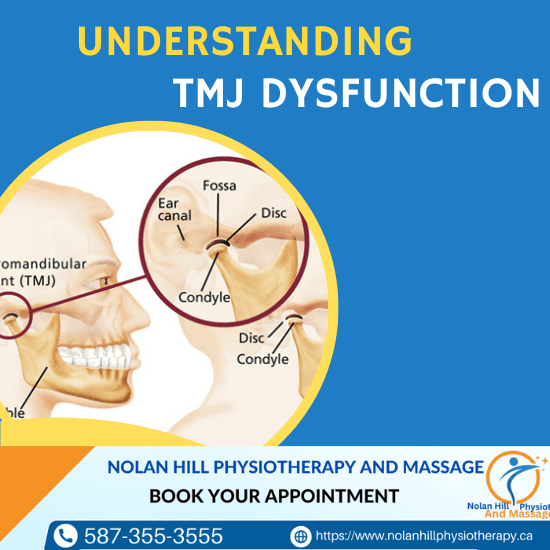
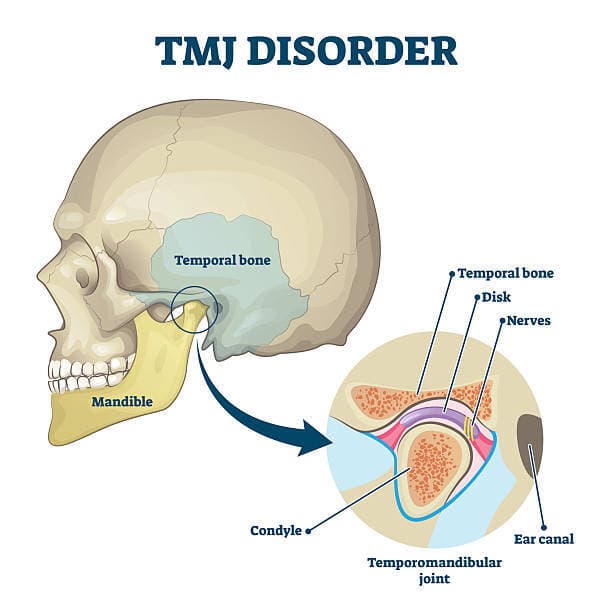
Your temporomandibular joints — the TMJs — sit just in front of each ear and connect your jaw to your skull. You use them thousands of times a day: every word, every meal, every yawn. So when one starts misbehaving, it doesn't stay quiet for long.
What is TMJ dysfunction?
TMJ dysfunction (often called TMD) is an umbrella term for problems affecting the jaw joint, its cartilage disc, and the muscles that power it. The joint itself is unusual — it both hinges and glides, with a small disc cushioning the movement. When the muscles become overworked, the disc slides out of rhythm, or the joint surfaces become irritated, the system loses its smooth coordination.
Common causes we see in NW Calgary
- Clenching and grinding (bruxism) — often stress-related, and often happening at night without you knowing
- Whiplash and head injuries — car accidents frequently injure the jaw alongside the neck
- Prolonged dental work — long periods with the mouth held wide open
- Postural strain — forward-head desk posture changes how the jaw rests and tracks
- Arthritic changes — the TMJ is a joint like any other and can develop arthritis
- Habits — gum chewing, nail biting, chewing on one side only
Symptoms that point to the TMJ
The obvious ones are jaw pain, clicking, and limited opening. The sneaky ones are why TMD goes undiagnosed for years: temple and forehead headaches, ear pain or fullness without infection, ringing in the ears, facial muscle tension, and even dizziness. Many of our patients have seen multiple providers for "ear problems" or "tension headaches" before anyone examines their jaw.
The neck connection
The upper neck and the jaw share nerve pathways and work as one mechanical system. Whiplash, poor posture, and upper-cervical stiffness all feed directly into jaw symptoms — which is why effective TMJ treatment almost always includes the neck.
The good news
TMD responds remarkably well to conservative care. Physiotherapy that combines hands-on treatment of the jaw and neck, motor-control retraining, and habit modification resolves or significantly improves most cases — no surgery required. If your jaw clicks, aches, or locks, or your "tension headaches" have never quite made sense, a TMJ assessment is a worthwhile place to start.
Our clinic director has specialized training in TMJ rehabilitation. Call 587-355-3555 to book an assessment at our Nolan Hill clinic — open 7 days a week.
Dealing with pain or an injury?
Our multidisciplinary team is here 7 days a week in Nolan Hill, NW Calgary — with direct billing to most insurers.
Call 587-355-3555Related Articles
More recovery insights from the Nolan Hill team
The Benefits of Physiotherapy for TMJ Disorders
Before considering splints alone or surgery, most jaw pain deserves a trial of physiotherapy. Here's what TMJ physio actually does — and the results patients can expect.
Santosh Singh
Registered Physiotherapist / Director
TMJ Treatment: Beyond Basic Jaw Exercises
If jaw stretches from the internet haven't fixed your TMJ pain, you're not out of options — you're missing the layers a complete treatment addresses.
Santosh Singh
Registered Physiotherapist / Director

Chronic Headache Relief Strategies
Many chronic headaches are driven from the neck and jaw — which means hands-on treatment can do what painkillers can't. A strategy guide for the headache-weary.
Santosh Singh
Registered Physiotherapist / Director