Cupping Therapy: Ancient Practice, Modern Benefits
From ancient medicine cabinets to Olympic podiums — why cupping has endured, what it actually does, and who benefits most from it today.
Xiaobing Hu (Tanya)
Registered Massage Therapist — Cupping Specialist
Cupping has one of the longest resumes in manual medicine — practised across Chinese, Egyptian, and Greek traditions for thousands of years, then suddenly famous again when circular marks started appearing on Olympic swimmers. Longevity like that usually means something real is happening. Here's the modern understanding.
The mechanism: decompression
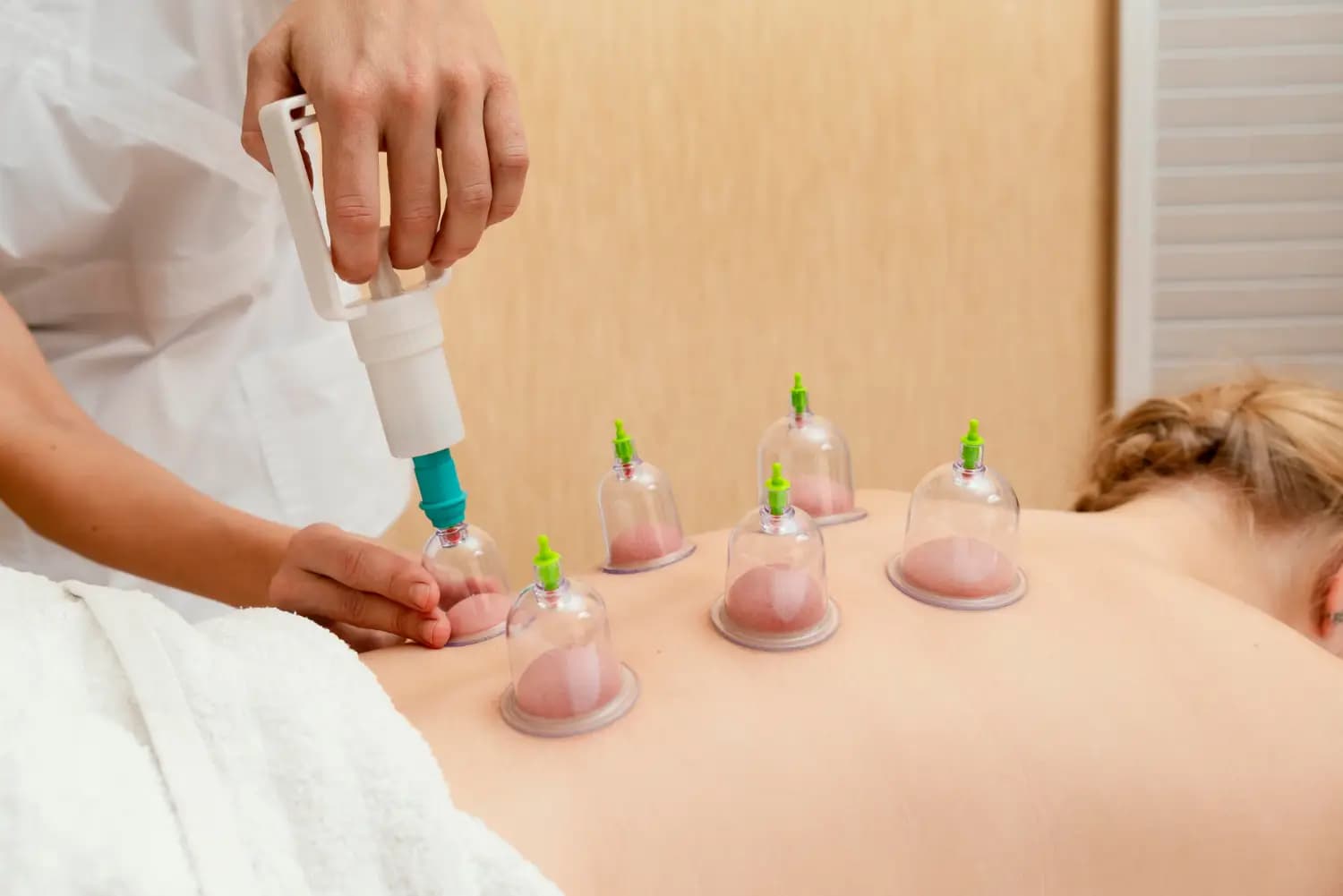
Nearly every manual therapy pushes tissue down — massage, foam rolling, pressure tools. Cupping is the rare technique that pulls up. Suction lifts the skin and superficial fascia away from the layers beneath, and that negative pressure does several useful things:
- Separates adhered tissue layers — fascia that has become sticky and dehydrated regains glide
- Floods the area with blood flow — the visible redness is circulation arriving in tissue that's been chronically compressed
- Gives the nervous system novel input — a strong, unfamiliar, non-threatening stimulus that often interrupts long-standing tension patterns
Static and dynamic application
In static cupping, cups sit over targeted areas — trigger points, dense tissue, chronically tight bands — for several minutes. In dynamic cupping, the therapist glides oiled cups along muscle groups, working entire regions like a massage stroke in reverse. Most sessions at our clinic blend both with conventional hands-on massage.
What it helps
Chronic back, neck, and shoulder tension; IT band and hamstring tightness that shrugs off stretching; postural strain from desk work; athletic recovery; and general stress held in tissue. It pairs especially well with stubborn areas that have stopped responding to standard pressure work — the novelty of decompression often unlocks what compression couldn't.
About those marks
Cupping marks aren't bruises — no impact, no damaged vessels in the trauma sense. They're blood drawn to the surface by suction, typically darker where tissue is tighter or more congested. They fade over three to seven days and don't hurt. Prefer to avoid them? Lighter suction and shorter durations mark minimally — just say so.
Cupping at Nolan Hill
Our cupping is performed by a registered massage therapist with dedicated training, integrated into massage sessions billed under your standard massage benefits — direct billing included. Curious? Call 587-355-3555 — NW Calgary, open 7 days a week.
Dealing with pain or an injury?
Our multidisciplinary team is here 7 days a week in Nolan Hill, NW Calgary — with direct billing to most insurers.
Call 587-355-3555Related Articles
More recovery insights from the Nolan Hill team
Massage Therapy in NW Calgary: Deep Tissue, Cupping & More
A tour of the massage services available at our Nolan Hill clinic — what each style does, who it suits, and how direct billing keeps it affordable.
Nolan Hill RMT Team
Registered Massage Therapists
What a Clinical Massage Therapist Actually Does
Beyond relaxation: how clinically-focused registered massage therapists assess, treat, and coordinate with your physiotherapy team for better outcomes.
Nolan Hill RMT Team
Registered Massage Therapists
Sports Massage: More Than Just Relaxation
Sports massage is a training tool with a schedule — different work before events, after them, and between blocks. How athletes use it deliberately.
Nolan Hill RMT Team
Registered Massage Therapists