
The Value of Physiotherapy in Sports Injury Recovery and Prevention
Beyond treating the injury in front of them, sports physiotherapists change the trajectory of an athlete's season. Here's where the real value lives.
Santosh Singh
Registered Physiotherapist / Director

Most athletes meet a physiotherapist the week something tears, sprains, or seizes. Fair enough — that's the urgent moment. But the clubs and athletes who get the most from physiotherapy use it on both sides of the injury: recovery and prevention.
Recovery: more than waiting with supervision
Untreated, many sports injuries "heal" in the loosest sense — pain fades, but strength, control, and confidence don't return on their own. The classic example is the ankle sprain: most go unrehabbed, and most recur. Structured rehabilitation changes the math:
- Accurate diagnosis prevents weeks of treating the wrong tissue
- Progressive loading rebuilds the injured structure to its pre-injury capacity — and then past it
- Movement retraining fixes the landing, cutting, or stride mechanics that contributed in the first place
- Objective return-to-play testing — strength symmetry, hop tests, sport-specific drills — separates "pain-free" from "ready"
That last step is where re-injury is prevented or invited. Returning on feel alone is the single most common rehab mistake we see.
Prevention: the quiet half of the job
The risk factors for most sports injuries are measurable in advance: strength imbalances between sides, restricted mobility at key joints, poor landing mechanics, and training-load spikes. A pre-season movement screen finds them; a short targeted program fixes them. The evidence is most dramatic in jumping and cutting sports, where structured prevention programs reduce serious knee injuries substantially.
Prevention work matters most for:
- Athletes returning from a previous injury (the biggest single risk factor)
- Adolescents through growth spurts, when mechanics change rapidly
- Adults returning to sport after years away
- Anyone making a big jump in training volume — first marathon, new league, tournament season
The multidisciplinary edge
At Nolan Hill, sports rehab draws on the full clinic: dry needling and shockwave for stubborn tendons, sports massage for recovery weeks, chiropractic care for joint restrictions, and psychology support when an injury shakes confidence. One roof, one plan.
Whether you're hurt now or want to make sure you won't be, call 587-355-3555 — open 7 days a week in NW Calgary.
Dealing with pain or an injury?
Our multidisciplinary team is here 7 days a week in Nolan Hill, NW Calgary — with direct billing to most insurers.
Call 587-355-3555Related Articles
More recovery insights from the Nolan Hill team
Teen Sports Injuries: Prevention and Treatment
Teen Sports Injuries: Prevention and Treatment
Spring sports and training camps can increase the risk of teen injuries. Learn how prevention, early care, and rehab at Nolan Hill Physiotherapy and Massage Clinic can help young athletes recover safely.
Nolan Hill Physio Team
Registered Physiotherapists
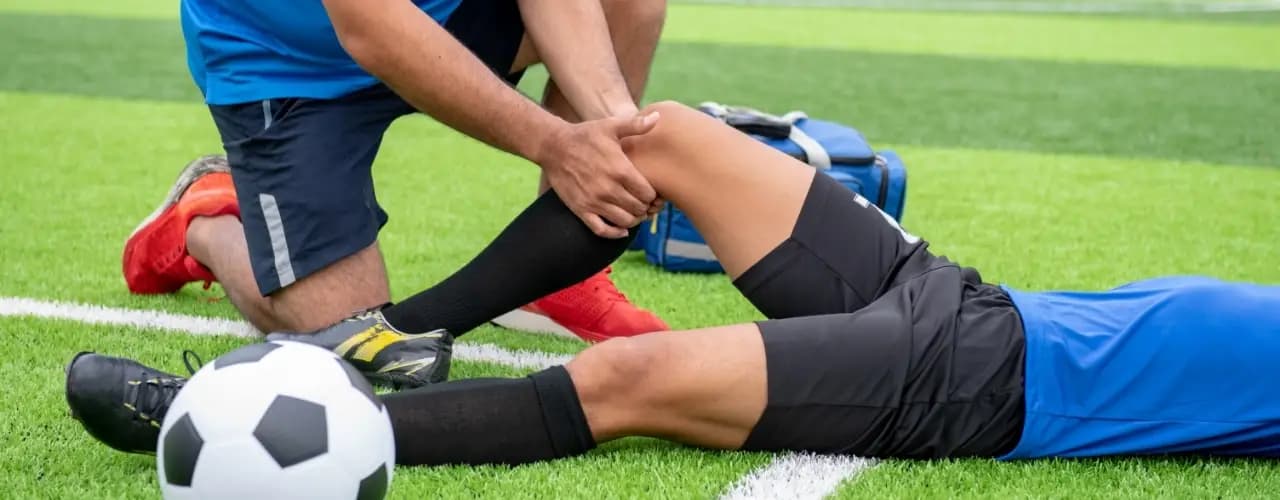
Preventing Sprains in Summer Sports: Play Hard, Stay Safe
Ankle and knee sprains spike every summer sports season — and most are preventable. The warm-up, strength, and landing habits that keep you on the field.
Santosh Singh
Registered Physiotherapist / Director
Golf Injuries: Common Problems and Solutions
Golf Injuries: Common Problems and Solutions
As golf season gets underway in NW Calgary, aches and injuries can quickly affect your swing. Learn the most common golf injuries and how treatment can help.
Nolan Hill Physio Team
Registered Physiotherapists