
Managing Sciatica with Exercise: What Works and How to Start
Exercise is the backbone of sciatica recovery — but the wrong moves inflame it. A practical guide to what works, what to skip, and how to begin safely.
Garima Singh
Registered Physiotherapist / Manager
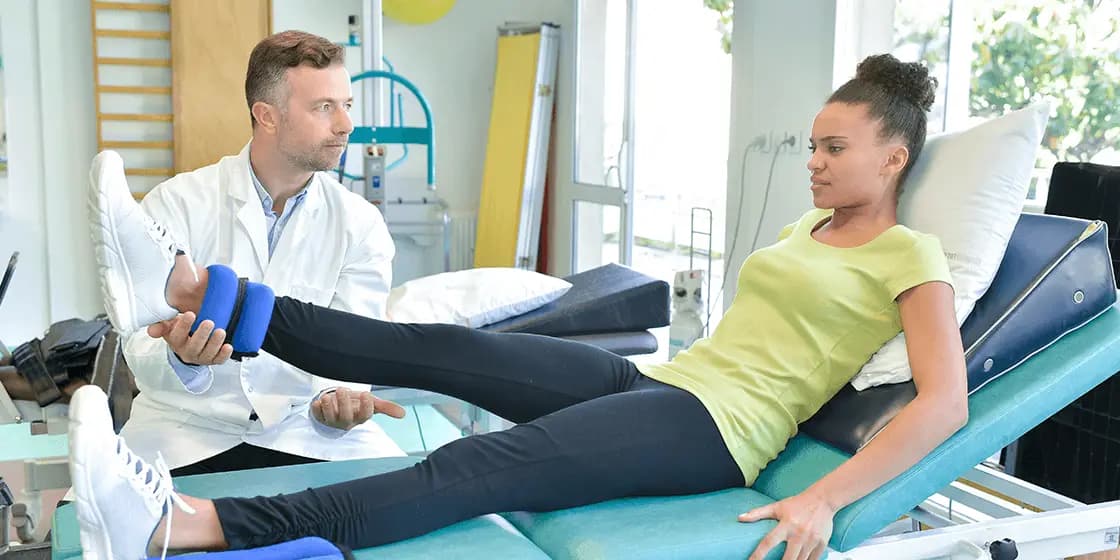
Sciatica puts people in an unfair bind: movement is the medicine, but the wrong movement bites back immediately. The way through is knowing which categories of exercise help at which stage — and respecting a few simple rules.
Rule one: watch where the pain goes
The most useful guide in sciatica rehab is centralization: if an exercise makes symptoms retreat up the leg toward the spine, it's helping — even if back pain briefly increases. If symptoms spread down the leg, that movement isn't your friend right now. Track this honestly and your body will steer the program.
Stage 1: Calm it down (early days)
- Frequent short walks — five to ten minutes, several times daily, beats one long march
- Positional relief — many people get relief lying on their back with calves resting on a chair seat, or lying face-down propped on forearms; find yours and use it between activities
- Gentle repeated movements — often press-ups into extension, if they centralize your symptoms
Stage 2: Mobilize the nerve (as the sharpness eases)
Nerve glides ("flossing") move the sciatic nerve smoothly through its pathway without stretching it: seated, extend one knee while looking up, then bend the knee while looking down. Ten gentle, rhythmic reps — it should feel like nothing or mild tension, never a flare. This is the most misunderstood exercise in sciatica: it's a glide, not a stretch.
Stage 3: Build the protection (weeks 2+)
Progressive strengthening is what prevents round two: glute bridges, bird-dogs, side planks, sit-to-stands, then loaded carries and hinge patterns as tolerance grows. The hips and trunk are your spine's suspension system — capacity there is the long-term fix.
What to skip for now
Aggressive hamstring stretching (it tensions the irritated nerve), loaded forward bending in the early weeks, and any "no pain, no gain" mentality — nerves punish bravado.
When to get help
If symptoms aren't trending up the leg within a couple of weeks, pain is severe, or you notice weakness — book in. Hands-on treatment, precise exercise staging, and dry needling for the guarded muscles accelerate the process considerably.
Call 587-355-3555 — Nolan Hill Physiotherapy & Massage, NW Calgary, open 7 days a week.
Dealing with pain or an injury?
Our multidisciplinary team is here 7 days a week in Nolan Hill, NW Calgary — with direct billing to most insurers.
Call 587-355-3555Related Articles
More recovery insights from the Nolan Hill team
Physiotherapy for Sciatica Pain: Comprehensive Care for Relief & Mobility
Physiotherapy for Sciatica Pain: Comprehensive Care for Relief & Mobility
That burning line of pain from your back down your leg has a name — and a well-mapped treatment path. How physiotherapy resolves most sciatica without injections or surgery.
Santosh Singh
Registered Physiotherapist / Director
Pre-hab Exercises for Knee Replacement: Your Guide
The strongest predictor of how you'll do after a knee replacement is how you go in. A practical pre-hab program for the surgical waitlist.
Garima Singh
Registered Physiotherapist / Manager

Back Pain Myths Debunked: What NW Calgary Needs to Know
Half of what people believe about back pain makes recovery slower. Six stubborn myths, corrected by what the evidence actually says.
Garima Singh
Registered Physiotherapist / Manager